
When children start school, their parents begin to lose the influence they once had. By the teenage years, peers are the most influential group as teenagers navigate finding an identity and figuring out the roles that they play. Unfortunately, teenagers who choose the wrong peer groups can find themselves getting into a lot of trouble.
Teens and Peer Pressure
According to a publication on peer pressure by Parent Further, only 10 percent of teenagers surveyed said that they had not been influenced by peer pressure. In that same group, 28 percent of teenagers agreed that giving in to peer pressure improved their social standing and nearly half of those surveyed admitted to picking on someone only after a friend picked on that person.
Peer Pressure With Drug and Alcohol Use
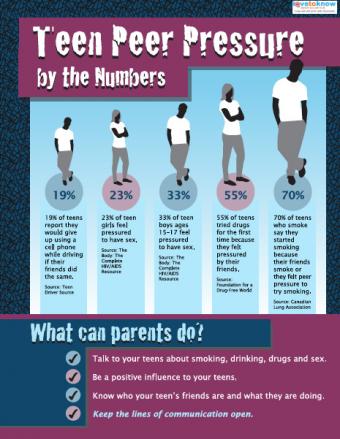
Drug and alcohol use is one of the biggest concerns when it comes to peer pressure. Even if parents have taught their teenagers about the dangers of drinking and using drugs, peer pressure may influence them to take part in these activities. In fact:
- According to The Canadian Lung Association, "my friends smoke" and "I thought it was cool" are two of the main reasons those between the ages of 12 and 17 start smoking.
- The Canadian Lung Association also found that 70 percent of teens who smoke have friends who smoke or started smoking because of peer pressure.
- According to the Underage Drinking Research Initiative, two-thirds of 10th graders and two-fifths of 8th graders have tried alcohol.
- The Monitoring the Future Survey from the same initiative found that approximately 30 percent of 8th graders have used illicit drugs.
- The survey also made three conclusions about the effect of peer pressure on drug and alcohol use:
- Teens with friends who do drugs and drink alcohol are more likely to do the same.
- Teens who drink alcohol and do drugs are more likely to convince their friends to do it too.
- Teens who do drugs and drink alcohol are more likely to seek out other teens who do the same.
Peer Pressure and Sex

As teenagers try to find their identity and acceptable roles, they also face pressure to give in to their new sexual desires. A study from the Kaiser Family Foundation found that:
- One-third of teenage males feel pressure from friends to have sex.
- 23 percent of females feel pressure from their friends to have sex.
- 44 percent of teens want more information on how to handle pressure to have sex and how to know when they are ready to have sex.
- 46 percent of parents have not discussed with their teens how to handle pressure to have sex.
Peer Pressure and Driving
As part of a survey from the insurance company Allstate, 89 percent of teenagers said that their parents had the most influence over their driving habits. However, that same survey showed that when it comes to driving, peers still have a strong influence. According to the survey:
- 44 percent of teens drive better without friends in the car.
- 56 percent said they talk on their cell phones while driving.
- 13 percent said they text while driving.
Peer Pressure and Self-Harm or Suicide

Sometimes peer pressure can lead to teens harming themselves through cutting or other dangerous fads or committing suicide.
- The Mayo Clinic says that teens with friends who self-injure are more likely to self-injure as well.
- A study from the Yale School of Medicine found that bullying often leads to suicidal thoughts in kids and teens.
Positive Peer Pressure
Not all peer pressure is bad peer pressure. Organizations such as the Red Cross, use peer educators to teach teenagers about safe sex because they have found that teens are more likely to listen to positive messages when they come from those in their age group. The National Association of Independent Schools suggests having older teens who do not use drugs or alcohol talk to middle schoolers to help influence them to make positive choices.
What You Can Do
Your son or daughter may feel he or she is ready to be on her or his own, but you try to hold on, which causes frustration and resentment. However, you do not have to argue with your adolescent when it comes to peer pressure. To help you and your child through this tough time:
- Keep the lines of communication open
- Offer support and advice without judgment
- Pick your battles
- Know their friends
- Talk about issues
- Set healthy boundaries
Parents do not get the reputation of being strict or the "bad guy" for nothing. If you fear your teenager is engaging in deviant behavior, it may be time to step in with discipline. Some young adults will not learn without a consequence, which means you have the job of providing it before the law does. Just remember to fit the crime with the punishment and always communicate the reason for the grounding or whatever discipline you decide. It will teach your young adult responsibility for actions and help him or her transition into a responsible and law-abiding adult.


